Meet TABEI Forum: bringing consortium chains to Taiwan and joining them to the ESG trend
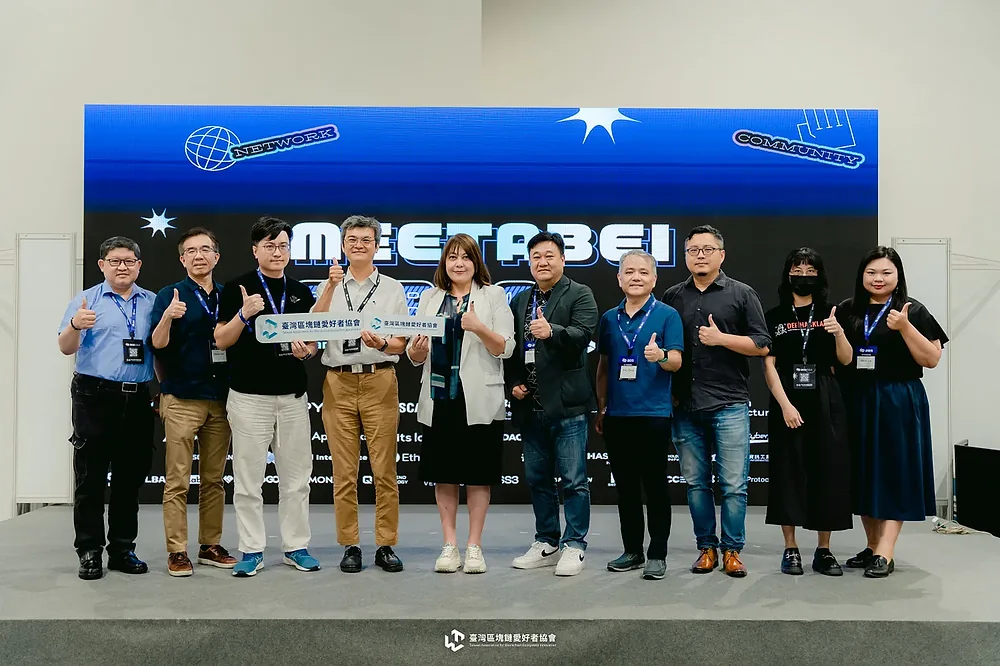
At last week's Meet TABEI Forum, hosted by the Taiwan Blockchain Enthusiasts Association, the first subject discussed was Taiwan's work on putting blockchain technology to practical use. In his opening remarks, Lin Ching-chin, head of the platform economy division at the Administration for Digital Industries, said that amid developments in information security, artificial intelligence, and other fields, blockchain is at a turning point, and that finding a direction for innovation depends on the community that cares about the technology. He added that the government is actively developing the digital economy, in which Web3.0 plays an important part, and that this work can help complete the government's digital-territory policy. Consortium chains need infrastructure to serve Taiwanese industry Blockchain networks are not limited to the public chains the general public sees, such as Bitcoin and Ethereum. Permissioned chains, also called consortium chains, are set up by a defined set of nodes and are often used by companies to share data among a limited group of participants. Because updates are made in real time, they improve the efficiency of data exchange between parties while keeping private corporate data confidential and trustworthy, and they remain a major route into applications in the real economy. During the panel, Li Yi-ching, head of the blockchain data governance division at the Institute for Information Industry, described Taiwan's cross-industry "blockchain trust infrastructure": the establishment of the consortium chain TBSI (Trusted Blockchain Service Infrastructure). Chou Sung-chun, chief executive of the blockchain platform company Snowbridge, noted that consortium-chain architectures in Taiwan had previously been confined to particular fields, with nodes set up for a single purpose — insurance, the judiciary, or audit confirmation — and no generality. Drawing on the EU's EBSI (European Blockchain Services Infrastructure), TBSI is intended to let every industry process data on one consortium-chain platform. On the question of scalability, Huang Chi-cheng, chief executive of the information-security company Bosch Security, said his firm works with a range of companies and maintains seven or eight consortium chains, with participants including ADATA Technology, the SinoPac Cloud group, and four banks. In practice, running many consortium chains is expensive, and each new chain takes considerable time to set up. As corporate ESG requirements rise worldwide, a common platform improves the case for consortium-chain technology in every respect. Meet TABEI Forum: where the Trusted Blockchain Service Infrastructure applies, with ESG as a driver On making consortium chains fast and effective, Li Li-kuo, chief operating officer of Taiwan Web Service (TWCC), noted that TWCC belongs to the ASUS group, and that a computer brand has to work with a great many upstream suppliers. From an ESG standpoint, about eighty per cent of emissions sit in the supply chain, and the carbon data of more than seven hundred suppliers has to be gathered and exchanged so that, for example, the carbon footprint of each laptop can be calculated precisely. That data used to be recorded in spreadsheets and corrected back and forth. Today it is collected, hashed, and written on chain together with a timestamp, which saves the company considerable cost when the record has to be traced. On ESG, Huang Chi-cheng gave the example of a project with the Small and Medium Enterprise Credit Guarantee Fund under the Small and Medium Enterprise Administration, in which corporate carbon-footprint standards ISO 14067 and 14064 and sustainability reports were uploaded to a blockchain. Working with Taiwan's carbon-footprint verification body, trusted data is extracted and checked on site, documents are signed with an on-chain identity, and the result is sent to a bank for green financing. This can reduce the financing rate by two to three basis-point steps: on a three-year loan of NT$1 billion, that is a saving of NT$30–50 million in interest. Huang added that in recent years Bosch Security worked with the Small and Medium Enterprise Administration on a twin transition project covering decarbonisation and digitalisation. Using existing supply-chain management systems, data on goods received, delivery acceptance, and ERP records relating to suppliers is written on chain through middleware and APIs, then connected to banks' corporate finance systems, so suppliers can obtain financing effectively. More than ten institutions have joined, including CTBC, Taishin, Mega, and SinoPac, and over NT$2 billion has been disbursed since September last year. The panel showed that exchanging carbon-footprint data between companies will require a trusted consensus mechanism. Led jointly by the Ministry of Digital Affairs and Taiwanese industry, and following international consortium-chain standards, data from institutions and from companies up and down the supply chain can be integrated to advance corporate ESG.